












Latest Story

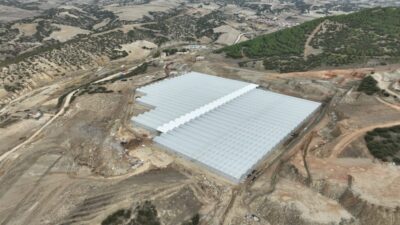
Rock band U2 to raise funds for geothermal plant in Turkey

In a news piece from Turkey, it is reported that "An environmental-responsibility project from Irish rock band U2 will bring money to the Dora-1 geothermal power plant in the Aegean province of Ayd?n. The project will raise approximately $450,000 for various environmentally conscious power plants if U2 fans purchase carbon certificates ...

Continue Reading...
Featured

Canadian Geothermal Code Investment Seminar, Toronto, March 3, 2010

The Canadian Geothermal Energy Association (CanGEA) invites to the "Canadian Geothermal Code Investment Seminar and Reception" at the St. Andrews Club - Toronto, Ontario, March 3, 2010 - 12:30 to 7:00 PM. According to the release by the organization, "CanGEA has developed the Canadian Geothermal Code for Public Reporting to promote ...

Continue Reading...
Australia & Oceania

Panax Geothermal ready to start drilling Salamander-1 well

Reported from Australia, "Panax Geothermal (ASX: PAX) said the spudding of the Salamander-1 well at the Penola geothermal project in Australia was imminent after four months of delays as the contract rig has been fully assembled on the well site and is ready to drill, while also reporting that discussions ...

February 1, 2010 | Comments (0)
Europe

Rock band U2 to raise funds for geothermal plant in Turkey

In a news piece from Turkey, it is reported that "An environmental-responsibility project from Irish rock band U2 will bring money to the Dora-1 geothermal power plant in the Aegean province of Ayd?n. The project will raise approximately $450,000 for various environmentally conscious power plants if U2 fans purchase carbon certificates ...

February 8, 2010 | Comments (0)
South America

Chile awards 17 geothermal exploration licenses

In a release by the Chilean Ministry of Mining late last week it was declared that "the bidding process for geothermal exploration concessions in the country ended successfully with an investment of over U.S. $ 106 million. The Government, through the Ministry of Mines positions Chile as the main destination of ...

February 2, 2010 | Comments (1)
Articles of Interest
By Region, Europe, General -February 8, 2010, 8:35 pm - Comments (0)

UK Geothermal heat providers would need higher renewable heat incentives

In a recent opinion piece in the UK, “Ryan Law, managing director of Geothermal Engineering, which is planning the UK’s first commercial-scale geothermal power plant, says that the Renewable Heat Incentive - released for consultation last week - needs to be refined to encourage a wide mix of renewable heat.

The government scheme to create renewable heat incentives (RHIs) has been hailed by DECC as an international first; and it’s certainly a scheme we welcome.

Renewable heat is currently a much underfunded sector that the UK needs to develop; the more diverse the UK’s energy portfolio, the more chance we stand of meeting the 2020 renewable energy targets.

Renewable heat sources can provide enough thermal energy to heat whole communities, and generation on this scale dramatically reduces the amount of wasted energy by keeping supply and distribution localised.

However, we do feel that the economics of the scheme need refining if it is going to produce a well-balanced portfolio of renewable power for the UK.
In March 2009 the Renewable Energy Association proposed that government classify 12 primary heat classifications as suitable for RHIs, and it is disappointing to see that this list has been almost halved in the official DECC documents.

Different methods of generating heat have different business models and we would urge the government to recognise this.

Deep geothermal heat production has high initial investment costs and is being commercially pioneered in the UK. To encourage these sorts of developments the RHI needs to be sufficiently tailored to make a project viable.

As it stands, geothermal heat has been categorized alongside large scale Ground Source Heat Pump (GSHP) technology, despite their very different investment requirements, and the fact that GSHPs use electricity from the national grid to supply the heat.

Geothermal heat providers need RHIs to be set at a higher level to attract more investment for both the power plants and the distribution networks required to connect consumers to the heat.

The RHI consultation closes on April 26.

Continue Reading...
Africa, By Region, General -February 8, 2010, 8:23 pm - Comments (0)

Eastern Africa nations planning joint transmission network

Reported last week, “Seven Eastern African countries will in the next four years be able to jointly produce power and have their supplies connected.

Eastern African Power Pool (EAPP) Chairman Eng Joseph Njoroge said on Monday that the member countries were working towards harnessing the vast energy resources that exist in the region to improve the integration of their electricity markets.

“Electricity is a very versatile product that requires very miniature logistics to transport. Interconnection between different countries is very critical for us to be able to realise our dreams of energy trading,” said Mr Njoroge who’s also the Kenya Power Lighting Company Managing Director.

Utility firms from Burundi, DRC, Egypt, Kenya, Ethiopia, Rwanda and Sudan are the members of the organisation that was formed in February 2005 in Ethiopia to secure reliable power supply for their countries by benefiting from economies of scale. Although Uganda, Tanzania and Djibouti are not members of the power pool, they have indicated their willingness to join and help to optimise the usage of available energy resources in the region.

There are four power pools in the African continent which aim to interconnect different countries with grid lines to enable them to share their resources.

Uganda and Kenya have for a long time had a connection that enables the two countries to rely on each other in times of needs. For instance in November last year, Kenya had to import about 30 Megawatts from Uganda to jumpstart its generators after they failed following a nationwide blackout.

The interconnection project entails the construction of high voltage transmission lines between countries and this has seen some several lines put up between the various neighbours including those that are not members of the EAPP.

Some of them include the 256 kilometer Bujagali (Uganda) –Lessos(Kenya) 220 kV Interconnection line which is being funded by donors including Japan International Cooperation Agency who have put in $50 million towards the project and the 172 kilometers Mbarara (Uganda)- Kigali (Rwanda) 220 KV Interconnection.
According to the EAPP roadmap, the Uganda-Kenya lines should be done by 2012 while the Ethiopia – Kenya and Kenya-Tanzania lines are expected to be completed by 2015.

The lines will make it possible to export power to other countries with energy deficits. Ethiopia for instance is currently putting up a hydro station with excess capacity while Kenya is executing several initiatives geared towards the exploitation of its huge renewable energy sources of nearly 9,000 Megawatts from geothermal and wind. These two countries will therefore be big players in the transmission and distribution of electricity in the region.

Eng Njoroge said the interconnection would ensure affordable power supply to majority of the people in the region and eventually contribute towards economic growth.

“One way of getting ourselves out of utilisation of fuel is by having those interconnections so that we use the natural resources prevailing in those different countries. If we do that we should see the cost of power coming down,” he added.

The MD spoke during the opening of a regional electricity market workshop where participants are expected to come up with a market structure and the design of electricity trading arrangements which will be adopted once the proposed projects are completed.

“What we are trying to come up with in this seminar is to come up ground rules and a clear understanding of how we can be able to trade in energy,” he explained.

Eng Njoroge however called upon the power companies to pay up their subscription fee amounting to Sh756000 ($10,000) which together with a Sh302 million ($4 million) financing from the European Union would go a long way in ensuring the smooth running of the EAPP’s secretariat.”

Source: Capital FM Kenya

Continue Reading...
By Region, Europe, Finance, Projects -February 6, 2010, 10:23 am - Comments (0)

PannErgy the only Erste Bank’s Stock TopPicks in Hungary

In a news piece from Hungary, geothermal developer PannErgy is describes as “the only Hungarian company that made it to Erste Bank’s Top Picks, with HUF 1,228 target price (it is currenty traded at around HUF 777), an upside of over 60%.

While Erste’s economists still believe that the fundamental recovery of markets in CEE region is on a rather sound footing, equity markets have shown themselves to be much more fragile.

“Austria and Hungary are seen posting the strongest growth rates, albeit after experiencing the biggest drops for 2009. Spreads between risk-free rates and earnings yields have narrowed. Consequently, the consensus sees the region as more or less fairly valued, based on the FED model (3% implied undervaluation).”

On 22 January,PannErgy announced that its partner ONP increased the capital of PannErgy’s geothermal arm Polifin by HUF 1.08bn. Via this step, ONP Holdings (owned by Ottó Albrecht, a Hungarian billionaire) acquired a 7.43% stake in the company. According to the preliminary agreement, ONP can increase its stake to 15% in a number of steps in the future.

Earlier, PannErgy increased the capital of Polifin to HUF 1.7 bn (from HUF 25 m). Out of the HUF 1.675 bn capital rise, HUF 725 m was cash, while HUF 950 m was an asset transfer. Therefore, Polifin has a good cash position right now (HUF 1.805 bn). The estimated cost of one plant at Miskolc is HUF 2-2.3 bn, depending on the location of the wells. The company intends to use a loan for these developments - around 50% of the required CAPEX would be provided by banks.

“Therefore, the present amount of cash is practically enough to develop two plants at Miskolc with a capacity of more than 20 MW. The plant at Szentl?rinc is expected to launch trial operations in spring, while two “unit” plants are expected to come on-stream in autumn and next January-February in Miskolc. If these developments are successful, the share price could see a boost by the end of the year.”

For the full article with more details on the Central and Eastern European stock markets, see link below.

Source: Portfolio.hu

Continue Reading...
By Region, Finance, North America -February 6, 2010, 10:11 am - Comments (0)

Financing currently the most critical element in geothermal growth

… so the CEO of Vulcan Power Company in a recent interview with Earth2Tech.com. According to the article there, Vulcan has “some 170,000 acres of geothermal properties in four Western states including California and Nevada. Vulcan is currently developing geothermal plants totaling 300 MW of power, and it has signed 180 MW of long-term power purchase agreements with utilities, with another 120 MW currently under negotiation.

Earth2Tech: Federal and state policies such as renewable portfolio standards and the Recovery Act largely fueled the U.S. geothermal industry’s growth last year. Could the loss of some of these drivers mean the industry will struggle to expand?

Robert Warburton: From our point of view, renewable energy is a clear focus in this country now and we don’t foresee that going away. The key is to bring the cost of [geothermal] down. There are firms out there — design firms and equipment suppliers –- who are working on more efficient geothermal technology and making projects more cost effective. So there are efforts going on, private and federally funded, to improve drilling techniques and the success rate of drilling. But geothermal on its own is already pretty cost competitive with grid pricing at this point.

E2T: How important is technology for the growth of the industry? Is technology the linchpin to making geothermal a large portion of the nation’s energy mix?

RW: I think financing is probably the most critical piece because geothermal is a capital-intensive business. Technology would follow after that to the extent you can be more efficient with your drilling — lower cost of drilling a well –- and improve your ability to find the resources. Typically you may assume that you drill 10 wells and two or three will be dry. If you can drill 10 but only one is dry, you just reduced your upfront costs. But over the next several years the key component will be access to capital. The current technology is robust enough to support the growth projections by the [Geothermal Energy Association].

E2T: We don’t hear as much about geothermal energy as we do about other forms of renewable energy, and it seems venture capitalists, with a few exceptions, have largely ignored the sector. Do you think the industry has failed to capture the imagination of investors and, if so, what needs to happen to change this?

RW: Its growth isn’t as high as other renewable energy. People put up 1000 MW wind farms. Geothermal is pretty much confined to the Western U.S., and that has had an impact. Plants tend to be in sizes of 20-60 MW, and that doesn’t capture the attention of the general population. Also, it hasn’t been as evident in the marketplace that geothermal is a very reliable and cost-effective renewable energy strategy. But I think that is becoming more the case now, and there is a focus within the industry in making it known.

E2T: Do venture capitalists have a role in geothermal?

RW: I don’t know that I’d call it an explosive new technology. There are steady advancements in technology but not what I’d call game-changing technology. But as investment firms get more comfortable with the drilling risk and the ability of firms to deliver, I think you’ll see more investment.

E2T: Where do you see opportunities in geothermal for startups?

RW: Potentially on the drilling side, but there is a lot of competition. Also on the equipment supply side, maybe to come up with a more efficient system to extract that energy. There are a number of firms working on technology to extract energy from lower fluid temperatures [see for example, Raser Technologies’ use of so-called Kalina conversion technology]. Right now, the main focus on geothermal is to find fluids typically above 275°F or 300°F but to the extent that you can use lower temperature fluids, it opens up more opportunities from a drilling point of view. You could use fluids that in the past weren’t hot enough to be used by the existing technology.”

Source: Earth2Tech.com

Continue Reading...
Recent Headlines

Canadian Geothermal Code Investment Seminar, Toronto, March 3, 2010

The Canadian Geothermal Energy Association (CanGEA) invites to the "Canadian Geothermal Code Investment Seminar and Reception" at the St. Andrews Club - Toronto, Ontario, March 3, 2010 - 12:30 to ... Continue Reading...

GeoPower Americas, San Francisco, February 15-17, 2010

As part ThinkGeoEnergy's ongoing relationship with the GeoPower events, I am herewith pleased to extend an invitation for the GeoPower Americas conference, which takes place February 15-17, 2010 in San ... Continue Reading...

Senator Reid to deliver keynote at GEA Geothermal Finance Forum in NY Jan. 14, 2009

In release by GEA, the organization says that  "Commemorating the Geothermal Energy Association’s (GEA) Geothermal Energy Finance Forum, GEA Executive Director Karl Gawell, officers and members of GEA’s board of ... Continue Reading...

GEA Geothermal Energy Finance Forum in NY, January 14, 2010

The U.S. Geothermal Energy Association’s (GEA) one-day Geothermal Energy Finance Forum will bring the finance and investment community of New York City together and provide a tutorial on geothermal energy ... Continue Reading...

REYST - Graduate Programme in Sustainable Energy backed by Reykjavik Energy

From time to time I cover some educational efforts for promoting sustainable energy and in particular geothermal energy. So there one doesn´t come around a programme offered in Reykjavik, Icleand, ... Continue Reading...